Always interesting, often different

Posts tagged ‘Disabled People’

Mental Health Awareness Week

The Irony of Randomness
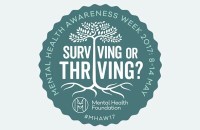
This is the week organisations and employers are encouraged to make sure they have structures in place to support staff who may have mental health issues.

It is also a week for some to feel able to talk about their own mental health diagnosis. Another way of marking the week, as many election candidates have done, it to look at ways our NHS should be doing more to prevent young people going into crisis. 

But for me, this week has been one of stress and worry, which could easily be resolved. Under the cruel Tories, I and so many disabled people continue to suffer unnecessarily. I receive DLA and was given an indefinite award 8 years ago. I should not need to be re-assessed. But then the rules changed. Everyone, no matter what their condition, has to be checked up on. This includes people who were born with severe mental and physical disabilities who cannot do anything for themselves. 

Two weeks ago, the dreaded envelope dropped through my letter box. The DWP require me to complete a 24 page form asking asinine questions about my health and what I can and cannot do. This week I have to return it. The irony and randomness of having to so during Mental Health Awareness Week is not lost one me.

Luckily, I’ve recently registered with a new GP and seen a new Consultant so my ‘everything you need to know’ A4 sheet is up to date with diagnoses and medication. I have also got a supporting letter from a Nurse who knows me well. I have warned my GP and consultant they will most likely be contacted.

I have 5 long term conditions, none of which will ever improve. I understand and accept that. But the DWP tick box managers clearly do not. Every 2-3 years they send me another form to complete, with questions on it that bear little relation to my everyday life. Can I lift or move a box? Can I put a pen in a top pocket? Can I touch the top of my head? 

Those of us with arthritic conditions, blood disorders or neurological symptoms, my friends with MS or Parkinson’s, all of us have to  go through this stressful process. It is totally unnecessary. The DWP could, much more cheaply, employ Doctors or specialist Nurses  to paper-check on-going claims. This would ensure those of us who can never return to full health, will retain our allowances. People who may have been debilitated after an injury or by an illness which is curable, would also be assessed and either be transferred to long term benefits or supported back to work.

The same could be true for the many people I know with mental health problems. Some people with a mental health diagnosis will never be stable enough to hold down a job. Forcing then to try and do so is most likely to end up exacerbating their already fragile mental health. 

So this week, I’m merely surviving. I want to thrive and focus on my writing projects, and doing some cyber campaigning for the election. But that’s not possible. I have the Sword of Damocles hanging over me. Will the money I need to live on be cut? Will I keep my car, which is my absolute life line? These are the thoughts that occupy my waking time and stop me sleeping at night. 

What would enable me to thrive? An questionnaire checking up to make sure I have enough support and care hours? That might help ensure I can live something approaching a normal life. The questionnaire could check if I’m socially isolated. Thankfully I’m not, but so many people are. It could also ask if my home is safe to live in, am I free from harassment, and if I can afford to keep warm in winter? 

All of those things would improve my life. Filling out a form to tell someone, with less qualifications than me, the obvious only causes me and all other disabled people stress and distress. 

Maybe next year the focus of the campaign should be to get politicians to understand how to help us thrive and not be burdened with having to just survive. 


Why this election is personal

The disability vote and why it matters

The UK is now in the midst of a General Election campaign. I have been a political activist in the UK and US since I was 14, and this time is no different. I’m involved in organisation and campaign strategy. I also manage several social media accounts to support our local candidates. 

I’m doing all of this because I want a change of government.

But for me, this is not just about voting Labour, a party I passionately believe in. A party that has the best policies to give us greater equality. In Jeremy Corbyn we have a leader who seeks a great distribution of wealth, and goverment for the many, not the few. The election is also about what this cruel and heartless government and the two preceding ones have done to disabled people.

Almost 19% of UK citizens have a disability. For most of us, we were either born with the disability, or we have become disabled having worked for many years. Those of us who have congenital conditions often suffered as children. Sometimes through neglect and sometimes through ignorance. Those of us who have acquired disabilities frequently find that even though want to work again, even part-time, that option is not possible. 

I have one friend, A GP who used to work with drug addicts. He has had a stoke, and as a result needs a wheelchair to get around. But his home is not wheelchair accessible, so he is denied a wheelchair. If he had a wheelchair, kept in his car or in a garage, he would be able to work again. But this is now denied him. All his years of training and expertise have gone to waste. He cannot afford to move, as he can’t get a mortgage because he’s not working. 

I have another friend, she has a congenital condition, and experienced a abusive childhood. She has trained as an actor and voice coach. Most of her work opportunities are in London. But she can’t afford to live here. So she struggles to survive on part-time hourly paid jobs with no security. She is also in constant pain and cannot afford ‘time out’ for the surgery she needs.

These storied are replicated all over the UK. I know other people who could work part-time, but cannot get the care support they need to enable to be employable.

So this election is personal for me and for my disabled friends. We are asking to become valued members of society again. It is wrong to view us as scroungers or cheats. We have skills aplenty – but need accessible transport and work environments. We need employers to treat us, and all workers, fairly. Did you know most people who use food banks are actually in work?

We need an NHS, free at the point of delivery that is run for the benefit of patients, not for managers or private companies bidding to run services. We need more nurses, especially in mental health, who are paid properly for the work they do. We want properly funded schools for our children and grandchildren. The money this would take can easily be found if companies and Tory backers no longer have ‘sweetheart tax deals’.

The only way that can happen is if people vote out Theresa May and her cronies.

Disabled people are becoming more involved in this election than ever before. My next post will give the story of what’s happening. 


Getting the best from your GP – Part 2

Medication and more

6 Know your meds

Understand what medication you have been prescribed. Know their names and how they work. Also be aware of both the generic (scientific) and proprietary (Pharmaceutical or trade) names.

There are lots of online resources. I find this one the bestYou can also try this NHS site which gives more of an overall view. 

By understanding what your medication does, you are also able to be alert to side effects. But beware – these can sound very scary. Also, not everyone suffers from these side effects and you certainly won’t get all of them. If you are someone who is aware that you may be easily influenced, give the information leaflet to a close friend or family member who can check side effects for you if you are worried.

7 Always report drug side effects

If you are having side effects from your medication, note them down. Use your notes when you go back to see your GP. If you feel you are getting more side effects than benefits from a medication – don’t be afraid to ask if you can try something different.  

The same medication can work differently on different people. Just because someone you know had side effects from a medication doesn’t mean you will too. 

8 Don’t be afraid to say no!

If you really cannot cope with the side effects from a medication, it is your right to say if you no longer want to take that medication. You should always discuss this with your GP first. But ultimately, it’s your body and your choice.

One of the most common drugs prescribed in the UK are statins. They are very cheap, and are given to patients who have raised cholesterol. One million people were prescribed statins in 2011

But thousands of people also suffer side effects from statins. The most common of these side effects are muscle pain and cramps. There is also a risk that statins can increase your chances of getting type 2 diabetes. Statins are often prescribed to reduce a risk of heart attacks caused by high cholesterol. Opinion on statins is divided, even between doctors themselves. 

My own, non-statistical, view talking to friends and family members who have taken statins, is that the side effects some people experience are considerably worse than the risk involved by not taking statins. 

That is my personal choice. If you need to make a decision about statins, or any other medication please discuss your options with your GP first. 

9 Check about supplements 

Many of us now take vitamin and other supplements to improve our health. But did you know they can interact with prescribed medication?

Check out what you are taking or considering buying with your GP. The same advice applies if you are seeing a hospital consultant. Please also tell the doctors or nurses if you are going to have investigations or surgery. 

10 Not all GPs or practices are good

Sometimes things go wrong. Try and resolve you concerns with the GP themselves. If your concern is about one of the reception staff, speak to the practice manager. Your complaint may help them deal with an ongoing issue. 

Where I previously lived in West London, there was an arrangement for my the nearest Chemist to pick up scripts from my GP’s surgery at least once a day. Usually this system worked well. I would order my meds on line and the script would be at the Chemist two days later. The following day I could have my meds delivered. 

However on several occasions prescriptions went missing or couldn’t be found. If I phoned to check what happening there was one particular receptionist who used to get very angry and defensive. On two separate occasions she accused me of lying about what the Chemist had said to me. 

The first time I just thought she was having a bad day. But on the second occasion I spoke to the Practice Manager. It turned out there were some ongoing issues with this particular staff member. Not only was the prescription collection system improved but the incident was used to try and help the Receptionist’s skills training. I stayed with that practice till I moved

Learn about the care other GP practices give disabled people. If you find you have chosen the wrong GP – find a better one. Poor care is not acceptable and you have a right to change your GP.


Getting the best from your GP – Part 1

Having great interactions

Finding a good GP is essential if you are to get good support and the right medication. It also matters when you need a hospital referral. Because of my nursing background, I also expect visits to my GP be an equal two-way conversation about medication or treatment.

Most GP’s surgeries allow you to order regular medication and book appointments on line. It’s well worth learning how to do this – it really isn’t difficult. Booking non-urgent appointments and ordering medication from home saves time and energy too.

I use the Health app in my iPhone to store all my medical informations. There are similar ones for other phones and they can be accessed even if your phone is locked. If you don’t trust technology make sure you have information available in case of emergency. Some people use Message in a Bottle.

If you have life-threatening conditions or allergies you may want to consider MedicAlert. They do charge a yearly fee, but provide a great service.

1 Do your research

Ask friends and neighbours, especially those with health problems.  If you need a GP who speaks your language, make sure that there are at least two GPs in the practice you choose that you can talk to. The same rule applies if you prefer to always see a woman GP. 

Check the Surgery out on line: the CQC is an indepedent inspection body who rate all GP practices on a variety of standards 

There is a totally independent site. It’s a great place to check. Their reviews are straightforward and give clear percentages for each question.

This NHS run site allows patients to give their own ratings on different services. I don’t find it as helpful as it tends to cite only the best or worse experiences.

2 Don’t think the nearest GP is best

Never chose a Surgery because it’s the nearest one to get to. I have to pass two GP practices to get to see my GP and it’s well worth the extra time. 

My friend Sue who lives the other end of London to me, chose her GP because he was nearby. Sue has type 2 diabetes and in the last 3 months has had 3 leg infections with blisters on her skin. Her GP wouldn’t send her to specialist Diabetic Nurse. He refused to give her a glucose monitoring kit. She was told she couldn’t see a specialist Tissue Viability Nurse about her dressings. She was also told to pay for the wound dressings.

The way she was treated not only broke NHS guidelines, but could have severely endangered her health. Because the NHS is short of money, Sue presumed that what she was being told was ok. She felt she didn’t ‘deserve’ any more care because it was too expensive. I was furious when I heard about this.

I spoke to Sue and explained the care she should be getting. She is now with a better GP. Although the surgery is a 10 minute bus ride away, Sue is getting referred to the right specialists and she will get the right care.

3 Speak to a GP before signing up

If at all possible, ask to speak with one of the GPs at the practice you are considering. This is especially important if you have a rare condition or multiple interacting conditions. You can often get an idea of they way you will be treated in future by the response you get to your request.

Also GPs who are training practices are often more up to date on new treatments and complex conditions. 

4 Find more than one good GP

Most GPs work in group practice settings. So whilst you maybe registered with a specific GP you can be seen by any GP who works there. You will probably easily find one GP who you have a great rapport with. But, GPs have holidays, are sick themselves or they go on training courses. So find at least one more GP in your practice who will know you and can look after you if you need something urgent when your GP is away. 

5 The power of paper

When seeing a new GP or hospital doctor for the first time I always take with me a concise medical history of the 12 operations I’ve had as an adult, my current medication and the allergies I have. This paper also lists the 8 conditions I’ve been diagnosed with and a summary of my current issues. This makes consultations much more focussed and doesn’t waste valuable time going over irrelevant stuff. It also means the Doctor has everything in front of them if they need to write referral letters or evidence letters for Social Services and the DWP.

Part 2 coming soon.


Petrol Pump Grip

An must-have gadget

One of the things I find quite difficult to do is refilling my car with diesel. Holding the trigger on the fuel pump requires a better grip than I have and it is also very painful.

Not many petrol stations in London have someone who will come out and assist you & I don’t always have a passenger who is able to help. When I do have someone with me I usually ask them to take my purse and pay for the diesel, as often the pay point is too far away for me to walk to.

Recently, through a disability magazine, I came cross PumpPal

A neat little gadget that you twist around the pump trigger and allows the car to be refilled quickly and easily. It’s a real boon for me and I would recommended to anyone even if you are not disabled.

It comes in four colour ways and can be bought directly from the manufacturers. Mine arrived very quickly & I wouldn’t be without it.


New Name

Recently I decided to re-invent this blog with a change of name.

Wheelchairvista had been the way I’ve seen myself for the last 5 years. Being in a wheelchair is the only way I can ever live my life. I know that will never change. So my life vista is now from sitting down.

Whilst hosting my blog via WordPress is great I don’t want my readers being hassled by unwanted ads. Also to get more people reading my words of wisdom – or otherwise – self hosting my blog is a better option. 

I looked at some of the new domain names out there .eu would have been great, but others have voted us out so that didn’t make sense any more. Choosing .london seemed too focused on where I live. Then as I scanned down the options I saw .life and knew I had my domain. 

This is my life – in many ways it’s a life I like and enjoy. 

Yes, I’m restricted – often by money – but then so many others much worse off than me. Often by ridiculous bureaucracy, but that can happen to many people. It’s dealing with low energy levels which for me is the hardest thing to do. 

I do have pain, but providing I’m sensible about what I do and take extra meds accordingly, I can manage to do the things that matter most to me. 

So wheelchairvista.life is exactly how life is.


I just don’t believe it!

No access at a disability AGM
 
Today is the Disability Labour AGM. It’s a 2 hour meeting being held in Manchester. For health reasons it’s not possible for many of us living down south to travel so far for such a short time.
 
My friend Sophie asked for, what in legal terms is called ‘a reasonable adjustment’, under the Equality Act 2010. Practically this means that she would like to take part in the AGM via Skype – or a similar video conferencing system. 
 
This would have been wonderful not only for Sophie, but for me too as well as others in a similar position.
 
But Sophie’s request has been refused. A refusal for a reasonable adjustment at a disability event – you couldn’t make it up! 
 
This is not an April Fool – but a real situation.
 
We are hoping that a mutual friend, who will have a laptop and mic with her will be able to and allowed, to link up with Sophie. 
 
Watch this space……………………
  
Will it happen? 
 

Drinking whilst Disabled – Part 2

The medical information bit

As disabled people we often have a more intimate interest in our bladder than most. At the most extreme end catheters of various sorts are involved.

I have one close friend who has a supra-pubic catheter so we often talk about the problems she has. Supra-pubic catheters are only usually used for people with severe spinal damage or who have had multiple problems using urethral catheter, i.e. one’s that go in through the urethra. 

The articles written by The Times columnist Melanie Reid – who is now tetraplegic following a riding accident describe only too graphically the very small gap between a healthy bladder and severe and life-threatening sepsis. 

When I first realised I needed to limit my trips out to places where I could plot a route between loos, I determined this would not restrict me. I remembered about a card I could carry. I also knew that I could take medication.

The card is called I just can’t wait and is available from the BBF

The medication I take is Oxybutynin which is used to treat people with irritable bladder syndrome and other related conditions. 

Oxybutynin can be taken in tablet form or as a patch. Please be aware there are alternative options and that Oxybutynin does not suit everyone. I’m fortunate, it works perfectly for me in that my bladder control has greatly improved. I no longer have to desperately rush to the loo more often than is convenient. 

This is specially relevant for me in the mornings. I often wake up with severe numbness in both my feet and at least one of my hands and some times both. It can take up to half an hour for my body to decide to start working properly. Prior to medication I would usually end lurching sideways and hitting myself on some furniture or at worst, completely fall over. 

For those who want a non-interventionist approach – there is the option of badder re-training. A leaflet from Kings College Hospital, London gives lots of good information. 

Some women find Kegel exercises help and wikihow has a great set of instructions.

There are also Kegel exercises for men which are sometimes advised after prostate surgery. This is the link to a useful US leaflet. 

Bladder problems are not inevitable whether you are disabled or just getting older. There is plenty of help. Some medical professionals will try everything not to prescribe you medication. But you have a right to access the treatment you want. If you are refused treatment, seek further advice from another doctor or specialist nurse.


Drinking whilst Disabled – Part 1

The unspoken issue

Next time you are out and see a group of disabled people having a meal – sneak a look and see what percentage of them are having something to drink. My guess is that it will be less than 10%. I don’t mean alcohol either, but tea, cofee or juice.

Why? The lack of fully accessible disabled loos.

Recently I attended a conference of political activists. At lunchtime there were three break-out groups, one for BEME, one for LGBT and a third for disabled people. The first two were held on the upstairs balcony of the main hall – which had no lift access. Thus stopping anyone who was disabled and wanted to attend either or both of those groups.

Having got lunch, those of us in the disability caucus started our discussion about how we could be more involved in our movement. It was a good and lively interaction with plenty of feedback for the Chair of the morning session and the conference organisers.

The conversation widened into the difficulties people had attending local meetings. As I looked around the group I realised, that except for one person, none of us were drinking anything with our food. That person has a hidden disability which requires her to drink regular small amounts of fluid. She is also reasonably mobile and doesn’t always need to use an adapted loo

For many of us, especially those with conditions that affect our spine, we have a constant worry about continence. Yes, I know there are now all those picturesque adverts for Tena Lady or similar products. But, for me at least, they remind me of those ghastly sanitary towels I had to wear at school. I found STs really uncomfortable and was very self-conscious wearing then, especially as they often made my skin very sore. I did try some of the various ‘discrete’ pads, when I first had some bladder problems, but felt they weren’t the answer for me.

But there is another aspect to this, almost every disabled person I know agrees there are never enough accessible loos. Even some of the ones that are marked as wheelchair accessible clearly aren’t – or you have to be a contortionist to be able to lock the door. I discovered one like that at a hospital I visited, which specialised in treating spinal patients!

As I’ve been writing this blog I’ve just seen a Facebook post from a friend who has encountered an “accessible” loo with a door that will only close if she leans her whole weight against it. Not easy and certainly painful if you use crutches and have severe joint pain, as she does.

In my experience the worst buildings for having “accessible” loos that aren’t, are hotels and pubs. But in both those locations the issue is often not just getting a wheelchair into the loo but navigating the various doors to actually get to the loo.

On several occasions I have decided to leave my wheelchair outside the door and stagger into the loo. Only to be greated on my way out with “If you can walk why do you use a wheelchair?” As you can appreciate, I often find it hard to give a polite reply. The best response to this question came from a friend “If you’ve got brain why don’t you use it?”

So I knew full well why I and my fellow activists were all staying ‘dry’ for the day. Many had long journeys to get to London and you certainly can’t guarantee that you will find a useable loo on either a coach or a train. 

This was highlighted by a Paralympic athlete who spoke of her humiliation after being unable to access a suitable loo on her train journey. You can read the article here.

Yes, we know we should drink more fluids – though I consider the two litres a day advice to be a definite myth. If faced with the option of restricting what you drink or not being able to get to the loo in time – which would you choose?

The second part of this post will give information about the options some disabled people chose to help them deal with bladder problems.


How (not) to chose a carer – Part 2

Read this before you employ a carer

Until you trust a carer, never leave them in a room alone where you have money, medication (especially if it is opioid-based), jewelry or small valuable objects. I feel so sad to write this, but over the years I have had over £2,000 worth of property stolen as well as money and medication. I’ve had food “disappear” too, as well as cutlery, though both of these items may well just have landed up in the trash.

Some carers can be very acquisitive. I nearly always have a box of things ready for my daughter and grandsons to take home with them when they visit. I’ve had two carers in particular who would always ask if they could take things from the box to send back to their home country. Both knew my daughter and the boys, but would always try their luck!

Employing carers through Direct Payments is an option encouraged by many Local Authorities (LAs). But wonderful as that sounds it can prove to be a complete nightmare. Some of the pitfalls I and others have come across include; not been allocated enough money to enable you to pay a carer the Living Wage. Another issue can be dealing with pay roll, especially if you employ more than one carer. I landed up with a tax bill of over £400 because there had been an error made in calculating my employee’s tax. My carer had given the correct info to the payroll company but they would accept no responsibility and as the employer I had to foot the bill!

Someone I know employed a carer who had previously worked for her via an Agency used by her LA. The carer concerned had been with my friend for over 18 months and she was happy with her. The Agency was closing down so my friend decided to move to Direct Payments. The Carer produced a wage slip with all her details on it, including her NI number, she showed a passport which entitled her to be in the UK, and a valid DBS check.

Over a year later my friend was visited as part of a spot-check audit and to her horror was told the NI number her carer was using was not valid & she was accused of deliberately employing someone who had no right to work in the UK! The carer “disappeared” back to her own country – it appeared she had been using someone else’s documents. The stress & distress this caused my friend was horrendous.

The UK government requires anyone employing a staff to enrol them on a pension scheme, something else that can add a further level of stress. Many LAs have a local organisation that helps with these issues, IPBN is one, but other LAs seem to provide little help or the organisation who in theory helps with this is so underfunded that there is a long waiting list for their services. Another consequence of Government cuts!

There is a great website which is well worth reading if this is something you or someone you know are considering doing.

The experiences of myself and friends who have the cognitive ability and strength of will to employ their own carers are shocking enough, but imagine the difficulty of doing all of this for an aged family member when you live far away. I know many who have struggled with this – and eventually have found everything to difficult and moved their relative into a care facility.

One of the best prices of advice I can give is to suggest people employ Trainee nurses, or Nurses who have trained abroad, but are awaiting their UK registration. My experience is that they often make the best carers, they are motivated and want to learn. Because of my own nursing background I’ve be able to help and support them with written work, or just been there as a listening ear when they were struggling. The other thing I’ve found myself doing is acting as a mentor in helping them deal with difficult clients, family members or employers! This has been great for me as I’ve felt useful again, and I hope it’s given them the support they needed.

Choosing a carer can be a lottery, but if you manage to find a great one, they are worth their weight in gold.

Tag Cloud