Always interesting, often different

Archive for the ‘Medical’ Category

A Trip to the Countryside


Sadly I didn’t get to ride the horses!

As readers of my blog will know I’ve had several eye surgeries in the last few years. This year I wanted to be free from hospitals and operations. However, my body had other ideas! 

Whilst my mobility is compromised by both my spinal arthritis and my poor lung function, I can usually stand and walk a few steps without too much pain. I take regular analgesia and my pain levels are usually well managed. But my balance is poor and a few days after a fall in September last year, I experienced a severe pain in my right leg, I was unable to put it to the ground without excruciating pain and soon I had the pain when I was sitting or lying down.

Fortunately I was seeing a Rheumatologist as a follow up after a steroid injection into my left wrist (for pain due to having to try and carry trays of from my kitchen), this was also remedied by getting extra care hours, so I didn’t need to carry stuff. When I went to what should have been my discharge appointment, the Consultant agreed to send me for an MRI. I waited in vain for the appointment, but he was a locum consultant and hadn’t done the referral correctly. Several phone calls later I finally got my scan. When the result came back it was as I had expected, I had a trapped nerve. However this was complicated by a cyst between two of my lower vertebrae L4/L5. 

According to what I understand is now NHS standard protocol, the next step should have been to refer me to the local MSK (Musculo-Skeletal) Triage Team. This is a group of specially trained physiotherapists who decide on treatment according to various treatment pathways. See here for an example of how this works.

I knew that the only way my pain would be resolved would be by surgery and there was no way I wanted a referral to my local hospital. The last time I was an inpatient there following cancer surgery I got a hospital acquired infection which caused wound healing failure and meant that my shoulder wound became so deep that my scapular was visible. The wound took over 15 months to heal. I also knew that weeks waiting for appointments to professionals who couldn’t help me would have a negative impact on my health and well being. More concerning, I had also began to experience peripheral neuropathy, ie numbness in my feet and I knew I needed treatment quickly. This also was affecting my balance, which made any walking really scary. 

One of the advantages of working as a Nurse (my former profession) is that you get to know an awful lot of medics, one in particular came to mind. She had worked for many years at RNOH in Stanmore, a world renowned orthopaedic hospital that specialises in complex cases. I was well aware that I would qualify for treatment there and discovered that I could get referred directly by my Rheumatologist. That should have been a simple letter and the sending of my MRI scan, but in the way of many NHS referrals there were several hiccups, letters not being done, the scan getting lost between the two hospitals, in all it took 3 months before I was finally seen at a wonderful state of the art building in central London.

As soon as I met my consultant I knew I had the best person possible. I had a scan just 30 minutes before I saw him, I had my medical history taken by his Registrar and underwent a rather painful examination, (it took me three days of complete bedrest to recover) the Registrar was very apologetic, but I knew he needed to examine me fully. Then I got to meet my consultant, he immediately pulled the scan up on his computer screen, and took both me and my partner Eve through the images so I could understand exactly what had happened and why I was in so much pain. 

We agreed a treatment plan, I was to be admitted as a day-case so that my cyst could be aspirated to see if that would lessen my symptoms, this would be done by guided imagery and I would also be put on the waiting list for full spinal surgery. 

I quickly got the appointment for my day surgery. I was admitted into a lovely private room, and was taken down to the imaging department where I was placed on my front, given some wonderful short acting anaesthetic and the next thing I knew I was being wheeled back to my room. A few hours later my lovely friend drove us back home. Over the next few days I noticed some reduction in my pain, but that wasn’t sustained, so I was thrilled when I got a surgery date for four weeks later. The date could not come soon enough!

As preparation for my surgery and to prevent MRSA I had to use special body and hair wash, nose ointment and some ghastly flavoured mouthwash! I decided to drive myself to the hospital as there was lots of available car parking and I knew I had friends who could drive me home again. I was admitted to a main ward and promised a side ward after my operation. I had previously been sexually assaulted when I was on an NHS ward by a male patient and am now very nervous of being in mixed sex wards. Whilst there were separate male and female bays, they were adjacent and I did not feel safe.  

The staff were incredibly understanding of this, and one of the Senior Nurses, who was on the hospital safeguarding panel, asked if she could talk about my situation, anonymously, to the panel. I agreed and I hope the way staff supported me would help others who had may have had similar experiences.  

The RNOH could be described as somewhat ramshackle. It is set in 112 acres of green belt to the north of London. It was first built as a hospital just before the WW1 when it became an emergency hospital for the military and also began to house disabled soldiers in 1918. In the 1930’s the hospital became known as the leading centre for the treatment of Polio and TB. Come WW2, lots of Nissan huts were erected to house civilian patients and war casualties. Many of those huts are still being used, with long interconnecting weatherproofed corridors. Some of the corridors are really steep due to the contours of the surrounding land. When I went to theatre my bed was pulled on an electric truck operated by a porter, even the wheelchairs the porters use have electrical assistance. I had been well advised not to have my surgery there in the winter. It looks as if the latest lot of plans for redeveloping the hospital may finally come to fruition, I really do hope so.

Despite the difficulties of the building, everywhere was spotlessly clean and the care I received was wonderful. Firstly the ward I was on had enough staff to care for the patients, a rarity in today’s NHS. All the staff I met treated me well, they understood and accepted my limitations and gave me good personal care. Pain relief was offered regularly and every nurse who came into my room checked my pain score. There were no issues about giving me my own top-up Diazepam for the muscle cramps I sometimes get, in other hospitals I’ve had major difficulties about getting it prescribed and given. The whole ethos of the ward was that everyone cared for the patients. Domestic staff as well as Nurses of all grades were friendly and professional. The one downside was the food. The menu was well designed, but the food was not good quality and it was very repetitive, with the same choices each day. I was glad of the extra treats I had taken with me. 

My surgery went exactly to plan, although it took longer than expected due to the difficulty of removing all of the cyst. I spent my first post-operative night in HDU, which is routine for RNOH surgical patients. My previous HDU experience had not been good, to say the least, so I was slightly apprehensive. But I need not have been, my care was great, I was given enough analgesia, and I did manage to get some sleep. The next day I was back on the ward and in my lovely side room. Although the room was small, I always had easy access to my wheelchair, even though staff had to bring it from another area on the ward, and then had to manoeuvre my bed & open both doors. I never had to wait to use the loo and staff were always on hand to support me when moving from bed to chair. 

I saw both Physiotherapists and Occupational Therapists. The Physio was great, and she didn’t push me to do things I couldn’t do, again a new experience, I’ve previously felt very bullied by some Physios. Even the Social Worker came to try and get my Local Authority to sort out my Care Package, this will be the subject of another blog post.

My partner came to see me each day and our Rabbi came to visit too, which was wonderful. By 5 days post-op I was ready to go home. Our Rabbi’s husband came with my partner to drive my car home, the journey was not too painful, other than going over the dreaded speed bumps along our road. I was really glad to come home and see my lovely cats, who seemed pleased to see me. But my biggest treat was a takeaway from our favourite Chinese accompanied by a large glass of wine. Desert was some scrumptious champagne truffles Eve had brought for me.

I’m writing this two days later, my pain levels are reducing, I’ve even reduced my pain killers, but I still can’t spend much time in my wheelchair. But it’s so great to be home. 


Corneal Rejection Update

I went back to Moorfields last Friday for my check-up. This was to find out if there had been any improvement in my graft or whether the rejection diagnosed four weeks previously had continued. When I saw the Registrar he confirmed what I had thought, there was no improvement and I would need to have a re-graft. My previous graft on that eye was 22 years ago, so I guess it’s done me well.

When the Consultant came to discuss the surgery with me, he explained that not only would he be giving me a new corneal graft but that he would also be removing the cataract which is also growing on my right eye. I didn’t realise that it was possible to do both procedures at the same time. He reassured me, but did remind me that the chances of graft rejection are higher when having a second graft. I completely forgot to ask if he will also implant a lens, but I’m due to see him a couple of weeks before the surgery, so I will remember to check with him then.

The surgery will not be until September. That was partly my decision, as my daughter was abroad when I had the partial re-graft on my left eye last year, and she very much wants to be with me because of the poor nursing care I had last time. She will not be home until next month and I also need the time to try and get my care package increased for my postoperative period. All of this is complicated by the fact that I will have to been in hospital overnight again as I will be having a general anaesthetic. I have previously had severe reactions to local anaesthetics.

I’m not worried about having a general anaesthetic, but am very concerned about my post-operative care, as last time nursing staff did not understand my need to use my wheelchair for all mobilisation, that my balance is poor and that I have restricted movement and poor grip in my left arm. So I need help transferring from bed to wheelchair and back again.

Because of my concerns, I spoke to Jasmine, the lovely Specialist Nurse at Moorfields and she has given me contact details for the Specialist Nurse at St George’s Hospital in Tooting, South London, where my operation will take place. This will enable me to talk through my needs and hopefully meet with ward staff so that they understand how I should be nursed. Even though my daughter will be at the hospital with me, I don’t want her to have to be battling with nursing staff to ensure I get appropriate care.

Following my partial re-graft surgery last year, my surgical care was excellent, but nursing staff had no idea how to care for someone using a wheelchair who also needed help with many activities. All of this was complicated by the fact that my operated left eye is the one in which I have most vision, so immediately post surgery I had very little vision, which the nurses failed to take into account when they wanted me to do things, such as going alone to a room at the end of the ward that I couldn’t see well enough to navigate to. Also, despite telling staff I was Jewish, the breakfast I was offered was a ham sandwich!! It seemed very difficult to provide me with anything more appropriate. My letter of complaint did not get a particularly re-assuring response, hence my apprehension.

But until I have my surgery, I will be enjoying the lovely summer weather and spending as much time as I can getting out and about.

I would also be interested in hearing from anyone who has had both a corneal graft and cataract removal at the same time.

Frustrating Friday

The Friday before last was a day of mixed fortunes, emotions and outcomes. Some of which I have no desire to ever experience again!

My day started with being woken up by the scaffolders finally removing the last remaining poles and planks from outside the front of my flat. Great I thought, as I had spoken to the contractors only two days before to ensure the rubbish that had accumulated on the scaffolding and which someone (probably my downstairs neighbour) had been throwing against my window for the last week or so just after the pubs closed, was also taken away. The contractors assured me that everything would be removed and the whole area brushed clean.

Once I had eaten my breakfast, I tried to speak to the scaffolders to remind them to clean up, but as none of them spoke English, I wasn’t sure I had been understood. That was soon proved correct. I had to leave to go for my Moorfields Eye Hospital appointment at 11.30am and I had difficultly walking the short distance from my door to the front gate, the path was littered with debris and junk, some of it had been put in a sack, but this was left on the ground with the rubbish falling out. I was not pleased! Before I started on my journey, I called the contractors and left an urgent message saying what had happened. It wasn’t just the inconvenience and danger of falling over, but I was tried and exhausted from having the stuff chucked at my windows, and scared that eventually one or more of my windows would be smashed.

I drove to the hospital, feeling very unsettled and apprehensive, I would be learning if any of the treatment I had started a week ago had reversed the rejection of my right corneal graft. Stressful enough, without having to deal with the incompetence of the scaffolders. When I arrived, no chance of parking in my usual space, the pub beside it had left out a large number of beer barrels and empty bottles in the parking bay. Definitely illegal, but it would take too long to contact the relevant council and get them moved so I had to find a space somewhere else. The only space I could find was going to be problematical, as I would not be able unload my chair onto the pavement and this meant I was going to have to ride on the road for some distance, not very safe. I parked up, leaving enough space behind me to unload my chair. I checked my mobile to see if the contractors had tried to call me, through having Bluetooth in my car, I should have been able to pick up the call. I found a very brief text message saying the contractors would come back on Monday. I was not happy, and felt I really couldn’t take any more of the disruption to my sleep, so somewhat distressed I called the Head Office for the contractors and made a formal complaint. I was appalled at being lied to and that they had no consideration for my safety, I expected to get a phone call, not a terse text. The woman I spoke to was very understanding, I explained how threatened I felt and she promised that she would get someone to contact me as soon as possible.

Whilst I was making my call, the car behind me drove away and I was just about to reverse my car into that space when a man driving a people carrier drove into the space and manoeuvred his car so that there was only about 9 inches between his car and mine, making it impossible for me to get my wheelchair out. There is a wheelchair sign and a notice asking people to give me room to unload my chair. But it’s surprising – or maybe not – how many people can’t read! I got out of my car and politely asked the man to move, his reply astonished me, he suggested I pulled out of the space, unload my wheelchair, leave it on the road and then park back in the space! I couldn’t believe what I was hearing! I explained that wasn’t a option, and thankfully he spotted another space further up the road and moved. Fortuitously the last car behind him also drove away a moment later and I was able to reverse to the end of the parking bays so no-one could park behind me! So having gained a great parking space I then unloaded my chair, but as I was doing so, the driver of the people carrier came up and started haranguing me. I couldn’t work out the logic of what he was trying to say, and quite frankly I couldn’t care! I just told him quite politely but firmly to go away, and thankfully he did.

I then had to navigate my way across a busy junction with lorries reversing in and out of a building site, quite scary, then drive up on a very narrow and extremely uneven pavement to get onto the wide pavement outside the hospital. I had to drive slowly and carefully as the pavement sloped a lot too, I was worried my chair would tip. I was partway along when a unmarked delivery van came up beside me, mounted the pavement and stopped. He must have been able to see me! I tried shouting, as he went to the back of his van to get out the parcel he was delivering saying I couldn’t get past. I think what he replied was; “tough”, though it may have been less polite. (Which was how I was feeling by now!) Really helpful idiot!

So I reversed along the pavement I’d just travelled, not easy to do, and had to drive down on the road, until I could reach safety. I was so relieved to get into the hospital, but also feeling very jittery. I was terrified as to what I would be going home to, I really felt I couldn’t face another night of aggro from things being thrown at my window, I was nervous as to what I would be told about my eye, after last year, I wanted a year free of surgery. But I had a strong suspicion that my eye wasn’t improving and I would need an operation before the year was out.

I got myself to the clinic and tried to concentrate on reading my Kindle whilst I was waiting for my vision check, but found myself getting even more unsettled. By this time it was almost an hour since my compliant to the contractors and I didn’t want to be taking a phone call from them when I was seeing my specialist. The Care Assistant doing my eye test then started checking the vision in the wrong eye! She hadn’t checked my notes properly and I had to explain what was happening. She then, for some reason unknown, asked where my partner was, Jan (my ex) had not been to the hospital with me for almost 2 years. Our relationship ended 22 months previously, and, that kindly meant enquiry hit a very raw nerve. I just burst into tears. The Care Assistant asked if I wanted to talk to someone, I just shook my head, saying I would go back to reading my Kindle. She disappeared off somewhere and 2 minutes later came back, started pushing my chair, saying she was taking me to talk to someone. My protests were ignored, and I found myself entering the office of the Clinical Nurse Specialist and Counsellor.

It was very strange for me to find myself talking to a younger version of my former professional self. Jasmine was kindness and professionalism personified. She listened to my tale of woe, understood why I was feeling so shaky, and gave me the space and time to get myself together again. I was extremely grateful for her availability and empathy. Whilst I was in with Jasmine, my phone beeped with a text, the contractors were on the way to my flat to clear up all of their rubbish. I was just so relieved. I felt safe again, which was definitely not how I was feeling before I got that message. It would have been nice to have an apology. But knowing the rubbish was being cleared was huge comfort.

It was then back to clinic and in to see the specialist and his team. The verdict was as I expected, my rejecting cornea was very waterlogged, I was to complete my oral steroids and to have stronger eye drops. I reminded the Registrar that I was allergic to preservative, he reassured me the drops he was prescribing would be ok, and that he was also giving me some more ointment for night time.

So, after booking another appointment for three weeks time, I sped off to pharmacy, anxious to get home. The drops were soon sorted, but there was a problem with the ointment, the pharmacist explained they had none available. I remembered from my emergency visit that the Doctor had prescribed an alternative if the one he wanted me to use wasn’t available, and expected the same thing to happen again, only to be told to get a script from my GP. Easier said than done, as it’s hard for me to get there alone because it’s so difficult to park nearby. But I realised I had to try as I would run out of the ointment really soon.

I managed to get to my GP about 20 minutes before they closed, I parked immediately outside in the Doctors own space so I could stagger in on crutches without getting my chair out. Painful (and risking a parking ticket) but necessary. I realised I wasn’t popular asking for a prescription so late in the day, but I explained the urgency and they promised to fax the prescription to the Chemist, whom I phoned as soon as I was home to tell them to expect it. The Pharmacist agreed to deliver it to me the next day.

I was pleased to be home, poured myself a large glass of wine, and begun the hourly regime of drops to my right eye. I noticed very quickly that the drops left a horrible taste in my mouth, and that they made my eye smart. But just thought; ‘Ok, I’ll just have to put up with this, if it helps get my eye better.’ But as the evening went on I began to feel very nauseous, and then started to vomit. By the time I settled down to sleep, I was glad to stop the eye drops and put the eye ointment in my eye instead. I was worried that the vomiting would disturb my sleep, but managed to drop off by about midnight and slept through till 8 the next morning.

But as soon as I started the drops the following morning my vomiting recommenced and continued until mid afternoon when I decided that the best thing I could do was stop the new drops and go back to the drops I had originally been prescribed at A&E.

The main reason for this was that on checking the drops carefully I discovered that they contained preservative to which I’m very allergic. My eye had become very red and painful, which I knew to be a reaction to preservative, as I’d had this before. I debated attending A&E, but didn’t feel safe to drive there and the thought of trying, via an out of hours GP service, to get a wheelchair accessible ambulance was too much to contemplate. I’ve had to do this during weekday surgery hours and the whole experience was so fraught with difficulties, I decided I was probably better off staying at home and trying to get rehydrated.

Gradually I began to keep clear fluids down, then a light meal. By the Sunday morning, I wasn’t at my best, but felt up to meeting a friend to a go and see a wonderful exhibition of Matisse cut-outs at Tate Modern. I was even more grateful for my wheelchair as I was very unsteady on my feet, much worse that I normally am. I had a lovely, but tiring time with my friend and managed to enjoy some rather good banana cake in the cafe. But I was very pleased to get home, and to lay down in bed.

On the Monday, I phoned the Chemist to find out when my new eye ointment was going it be delivered, as it hadn’t arrived on Saturday. I was staggered to be told the ointment wasn’t available due a manufacturing problem. Surely the Doctor who had prescribed this should have known? I wasn’t impressed. So I had to phone my GP surgery to get a further prescription for the ointment I’d originally been prescribed. Luckily the GP I spoke to was very helpful and gave me three weeks supply. This was eventually delivered to me on Tuesday afternoon, which was just in time as I’d finished the original tube.

I also phoned my Consultant at Moorfields, and left a message, explaining what had happened and asked for a call-back in case he wanted to prescribe some different drops. When his secretary called back two days later, she’d not managed to speak to the Consultant, but promised to do so that day and call me back if my drops were to be changed. I didn’t get another phone call, so have continued with my original drops and will be back at Moorfields in 10 days time. I will be making sure that I see my Consultant, not his registrar this time!

As a final swan-song from the scaffolders, their bosses turned up on my doorstep last Wednesday wanting me to sign their ‘Resident Satisfaction’ survey! I will leave you to guess my response!

Right Corneal Graft Rejection

This last week last been been stressful and I’ve yet something else vision-wise to adjust to.

Last Sunday I noticed mistiness, pain and weeping in my right eye. Having had similar symptoms when the 25 year old corneal graft in my left eye began to reject and I needed a partial re-graft in May last year, I feared the same thing was happening again, but this time in my right eye, which had originally been grafted 22 years ago.

My vision in that eye has never been good. As a child I had a pellet flicked into to it from a catapult and that caused me some vision loss. Eighteen months ago I was assaulted by someone with mental health problems. She punched the right side of my face causing me to sustain a retinal bleed. Both of these things affected my distance vision considerably but I have retained some close vision.

I was anxious to get to Moorfields to get my eye examined. I desperately wanted to go early the following day, Monday. But I have been waiting for several months to have the gate to my balcony replaced and Monday was the day this was finally going to happen. This may seem like a insignificant thing, but my next post, ‘The Gate’ will explain why this was so important to me.

So it was very early on Tuesday morning that I left home, grateful that the glop problem I had experienced on my left lens had now been solved and I wouldn’t have to worry about not being able to wear my left lens all day.

I got to Moorfields just before 8am, and was just about to reverse into my favourite parking space when I very large lorry drove over the pavement and manoeuvred into the gap! I was not happy! I got out of the car, but not quickly enough to speak to lorry driver, who had, conveniently for him, disappeared. He was parked illegally, the bay was only able to be used by cars with residents permits or Blue Badge holders. So I had to find another space quickly as I wanted to get to the Emergency Department before the morning rush. The only space I could find had unmarked orange bollards at one end of it, not a valid way of preventing parking, but a ploy often used by builders who want a particular space. Unashamedly, I parked my car and moved the bollards, so I could get my wheelchair out.

Fortunately from this new space, I was able to get to the hospital without taking my wheelchair on the road, a very dangerous things to do, as I would be invisible to any lorry going in or out of the building site beside the hospital. I didn’t want to end up as a wheelchair casualty.

At the Emergency Department I was quickly seen by a Nurse, and then by the Doctor, he examined my eye thoroughly and then sent me for an ultrasound on my right eye. I’ve had ultrasounds done on other parts of my body, but this was a new experience.

It was painless and quite comfortable, just a light touch over my closed eye lid. Technology is so wonderful, from the optical ultrasound it was determined that I had no detached retina or retinal bleed. I was relieved, at least with a diagnosis of graft rejection, I knew what I was facing.

The Doctor instructed me to use Dexamethasone drops every half hour into my right eye, and use a steroid ointment at night. Then an appointment was made for me to see the Corneal Fellow two days later. 

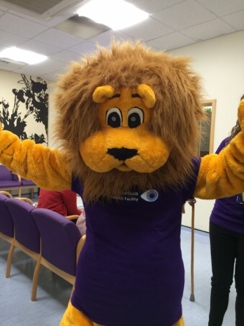
All I had to do now was collect my medication, whilst waiting, the Moorefields Mascot paid a visit to pharamacy, encouraging patients to visit the research unit to see what when on there. Tempting though this was, I just wanted to get home.

Three hours after I arrived I was leaving Moorefields, excellent quick treatment, the NHS at its best.

The cone dumping builders were waiting for the space I had appropriated, but at least they weren’t abusive. I was just pleased to get back in my car and be able to drive home.

On Thursday, as I was waiting for my next appointment, Ken Pullum walked passed me, most surprised find me at the clinic, and no doubt relieved that it wasn’t him I’d come to see with yet another problem with my scleral lenses!

The Corneal Fellow, whom I had met briefly last year, decided to prescribe me systemic steroids, to see if that, combined with the topical steroid drops and ointment would reduce my swollen and waterlogged cornea. I was to take 50mg of Prednisolone for 3 days, 25mg for 3 days, 15mg for 3 days and finally 5mg for 3 days.

I was to return the following week to see my own consultant to discuss any future treatment and possible future surgery.

After all the difficulties caused by not being able to get my care hours increased following my surgery last year, I wanted to have a whole year without hospitalisation. It looks now as though this may not be possible.

My only consolation, is that at least if I do need surgery, the good vision I have in my left eye will enable me to be reasonably independent post-operatively.

My only worry is that my balance is very poor at the moment, I’m having at least one fall a day. I’m not sure if this is due to or exacerbated by my loss of vision in my right eye. Part of the reason I know is the unsuitability of this flat, the lack of space I have and not being able to use my wheelchair inside the flat. Carrying trays from kitchen to living room or drinks to my bedroom is hazardous, and would be so much safer if I could use a trolley or my wheelchair.

So amidst having to prepare for probable future surgery I must increase my efforts to move from this flat, it is becoming a more dangerous place for me to be, and moving needs to happen soon, for both my safety and sanity.

Patches for Pain

I started taking regular pain killers many years ago, as it was the only way I could control the pain that wrecks my body.

I fought against being dependant on painkillers for a long time, but eventually had to come to terms with the fact that the only way I could control this beast was by regular analgesia.

I tried acupuncture, relaxation, mediation, even cannabis (kindly given to me by the boyfriend of my then flat-mate) but nothing worked well enough to reduce my chronic pain. Eventually my GP suggested I attend a pain clinic, the consultant was very good, recognising my professional background and knowledge, he felt that the only option I had was to try morphine patches.

Deep down, I knew that was what he would tell me. I hoped he might be able to give me details of research outcomes of long term use – I was only in my early 50s at that time – but none was available. Despite this, I decided I would try the patches. I’m really glad I did. They really have made a big difference to my daily life.

The morphine has helped not only with my pain, but also with muscle stiffness. It is not a cure all, I still get pain if I stand for more than a few minutes, try to lift anything heavy or sit in my wheelchair for more than a couple of hours. At times I need to a take top-up Tramadol for break-through pain, especially in cold or damp weather but for much of my day my pain is bearable.

However, I’ve learnt four things that I want to share as I hope they may help others

Always have a spare patch…….

and carry it with you at ALL times. I learnt this the hard way. About a year after I started using morphine patches, I was enjoying a day out with friends when I slowly became away of my pain increasing and feeling very strange. When I went to the loo, I discovered to my horror that my patch was almost off and that it had folded over and stuck to itself!

There was no way I could unstick it. I was several miles from home, and didn’t feel safe to drive. Luckily one of my friends, another nurse, was able to drive me home. I can’t remember much of the journey as I felt a sense of unreality and as if I was going in and out of a series of tunnels.

Once I was home I quickly put on a new patch and climbed into bed, still feeling very out of sorts. My friend told me that I was experiencing morphine withdrawal and gave me much much reassurance that once the new patch had started to work it would soon recover, she also advised me to take 10mg Valium (I have a prescription for occasional use if I get severe muscle spasm in my back) to ensure I slept whilst the new patch was getting into my system.

The next morning I work up feeling fine, and much wiser.

There is now always a spare patch in my bag!

Take spare tape as well

Occasionally a patch came can become unstuck at the edges. Sometimes this can happen if skin is not completely dry when the patch is applied, or if I’m wearing really tight trousers which rub at the patch and cause it to come loose. Just using a strip of tape, can save the day and help the patch to re-attach to my skin. My tape of choice is 3M Transpore, as I find it the least irritant on my sensitive skin.

I also find 3M Transpore great if I’m having a blood test as I’m often allergic to the tape the venepuncturist uses. Supplying my own reduces my chance of skin reaction.

My Wipe is great for removing sticky residue

Once a patch is removed there is always a ‘tide-mark’ left, just as there is with a ordinary sticking plaster. I tried various acetone based removers but they all seemed to cause a skin reaction. Then I found My Wipe on Amazon, it’s it easily removes the sticky residue and doesn’t unduly irritate my skin.

Use Derma Cream to reduce skin redness

This honey based cream is really great, it has many other uses, including helping with wound healing and infection. Again buyable from Amazon

I usually apply it directly after using a My Wipe and it substantially reduces redness and inflammation.

Beware though, it is quite sticky, and washing or using a baby wipe to clean your hands afterwards is essential.


Glop on my Scleral Lenses

I’m writing this in the hope that I can find a solution to the glop that appears on my lenses after I’ve worn them for 4-6 hours.
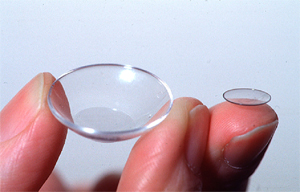
The photo shows some of the problem. I couldn’t get a better image as trying to take a shot of the lens with limited vision whist holding a iPhone in one hand is no easy task! Previous attempts showed much more glop, but the image quality was far to poor to use.

The glop is white and slightly sticky to the touch. It causes me real problems with reading print unless it is both enlarged and bold. Trying to read grey print, for example, is impossible. The glop does really affect any close work I’m trying to do. It makes anything I’m reading blurred, as though I’m looking through a cloud.

Interestingly, it doesn’t affect my distance vision so much. So watching TV isn’t too much of a problem.

I’ve tried taking my lens out (it mainly affects my left eye – the one I had a partial re-graft on last year) cleaning it with Oté Clean 40, and reinserting the lens. But, it seems that once my eye has started to produce this glop it continues to do so and with an hour my close vision is deteriorating again!

Very annoying and leaving me with a limited window in which to use my iPad, do other close work or write this blog.

Any ideas as to why I get this glop and what I can do to prevent it are welcome.

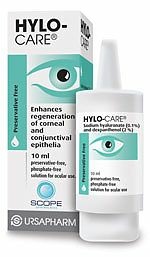
I use a combination of Lens Plus and HYLO-care as my solutions.

Wearing Scleral Lenses for Longer

I’ve had my new scleral contact lens for over 6 months now, and whilst I’m pleased they give me really good vision, I’m still trying to find ways of being able to wear them for longer each day. My current wearing time is now up to about 10hrs a day, but some days it’s only 8 and only very occasionally I can manage 12hrs.

Obviously this restricts my activities to some extent, the most difficult thing is travelling when I’m driving to see my cousins the other side of London. I need to time my stay with them to make sure I get home before my lenses start to cloud over or become very uncomfortable. Not always an easy task, as my journey times to and fro can take from 75ms to 150mins! Such are the variations in the traffic and the roadworks that continue to plague the London driver.

I’ve been experimenting with different solutions, my choice is limited to those without preservatives, as I’m allergic to them. I settled on Lens Plus but still had discomfort after a few hours. My consultant suggested using HyloForte to help with dry eye, but it seems to cause cloudiness. So, I started looking for other solutions. I came across Hylo-Care, which is designed for both dry eye and where there has been recent surgery or damage to the outer layer of the cornea.

I’ve been using this for over a month now and it really has helped to increase my wearing time, previously I was only getting 4-6 hours, this has now doubled. I don’t think it’s just due to increased tolerance, but purely to the drops, as when I had a problem getting the Hylo-Care prescribed and I had to revert to using the Lens Plus on its own, my tolerance level reduced.

Hylo-Care

Hylo-Care

Once I’ve cleaned my lenses I use approximately 15 drops of Hylo-Care in my larger, specially moulded scleral lens, topping up with Lens Plus. I then use approximately 10 drops in my smaller, conventionally shaped scleral lens before the top up of Lens Plus. I believe this mix of solutions is working well for me, and whilst it may not work for everyone I wanted to share my success in the hope that it may help some people. Not all ophthalmic practitioners seem to have heard of Hylo-Care and at my last hospital appointment the Registrar hadn’t come across it before.

Whilst Hylo-Care is available on prescription in the UK, I don’t know what the availability is in other countries.

One other problem I have had with wearing my scleral lenses is when my eyes do get dry, the area directly around my eye gets red and sore. I’ve been trying to find a reasonably priced eye gel that will help. I’m a great Body Shop fan and decided to try Aloe Eye Defence. The label says it’s ok to use with contact lenses, but like any skin product if you put it near your eye when you’re wearing scleral lenses you are almost guaranteed to have smearing & will need to clean your lenses and re-insert them! I somehow manage to do this at least once or twice a week!

Body Shop Aloe Eye Defence

Body Shop Aloe Eye Defence

So, I just use the Aloe Eye Defence first thing in the morning, about 3 hours before putting in my lenses and then at night before going to sleep. It certainly has helped to make the skin around my eyes less red. At £10 each bottle, Aloe Eye Defence is nowhere near as expensive as many similar cosmetic products either, so worth a try.

Six Common Misconceptions about the Chronically Ill

This article was originally published on ProHealth.com reposted by Arthritis Care UK and is reprinted with kind permission from its author Toni Bernhard.

More often than not, chronic illness and chronic pain go hand-in-hand, so when I use the term “chronically ill,” I’m including people who are in chronic pain. My hope is that it won’t be long until these common misconceptions become uncommon ones, as people become educated about what life is like for those who suffer from chronic illness (130 million in the U.S. alone).

Misconception #1: If people look fine, they must feel fine.

Whether healthy or sick, it’s good for most people’s morale to try and look nice when they go out. I go out so seldom that I make an effort to look my best when I do. Sometimes I feel like a young child again, playing dress-up. That said, I always hope that if I see people I know, they’ll remember that looks can be deceiving.

I’ve had people say to me, “You look great.” I know they’re trying to be nice, so I make an effort to respond graciously (with something other than, “Well I don’t feel great,” spoken in an irritated tone of voice). But the truth is…there I am, “looking great,” while my body is pulsating with flu-like symptoms, my muscles are aching, and my heart is pounding so hard that sometimes it feels as if it must be visible to others on the outside of my body!

When people see someone whom they know is struggling with his or her health, I hope they’ll remember that they have days when they leave the house looking great but feeling terrible, perhaps from a bad night’s sleep or from lingering symptoms of an acute illness. If they understood that this is how most chronically ill people feel all the time, this common misconception would be well on its way to becoming an uncommon one.

Misconception #2: If people’s illness or pain were truly physically based, their mental state wouldn’t affect their symptoms.

If you’re not sick or in pain, I invite you to try this simple two-part exercise, so you can test this misconception out for yourself

Part One. The next time you feel under stress—maybe you’re angry at someone or worried about something—stop; close your eyes; and pay attention to how your body feels. Can you feel that your muscles have tightened? In addition, your heart may be beating faster and your whole body may be pulsating. You may even have broken out in a sweat. These are just some of the ways that mental stress manifests in the body of a healthy person.

Part Two. Keeping that stressful mental state in the forefront of your awareness, now imagine that you suffer from chronic pain and/or illness. What would happen? Your body would respond to the mental stress the same way it did for you as a healthy person. But now, that response would be in addition to your chronic, everyday symptoms. And if those symptoms happen to overlap with the physical symptoms that accompany mental stress—tightened muscles, racing heart, pulsating body and maybe even sweating—you can see how a person’s mental state can easily exacerbate the physical symptoms of chronic illness.

This is why keeping mental stress to a minimum is so important for the chronically ill. It’s important, but often impossible. Why? Because we live in the same stressful world that healthy people live in.

Misconception #3. Preparing for an event by engaging in “radical rest” will assure that when the occasion arrives, the chronically ill will be in better shape than had they not rested.

I can “radically rest” for several days in a row before a commitment (I’ve had some events for my new book that I’ve been doing this for) and yet, on the day of the event, feel terribly sick. Resting may increase the odds that I’ll be less sick than usual on the day of the event, but it’s no guarantee.

When my granddaughter, Cam, turned six in September, I asked my husband take me to her birthday party for a short time since it’s only an hour’s drive away. It would have been a treat to watch her interacting with her friends (something I rarely get to see) and to meet their parents. I rested for four days before the event. But that morning, I called my son in tears to tell him that I was too sick to attend.

This misconception can lead to serious misunderstandings. For example, a week later, I was able to attend an event for my book. This could make it appear that I was choosing the book event over my granddaughter’s birthday party, but I was not (and thankfully my son understood this).

The truth is that the same amount of resting before each of the two events simply did not yield the same results. That’s the unpredictability of living day-to-day with chronic pain and illness. Not only can it be a source of disappointment and sadness, but if we don’t treat ourselves kindly and with compassion, it can lead to self-recrimination and be a source of terrible guilt.

Misconception #4: If chronically ill people are enjoying themselves, they must feel okay.

When an important occasion arises, people who are chronically ill have learned to put up with the symptoms of illness, including terrible pain, so they can try to enjoy what they’re doing, especially the enriching experience of being in the company of others. Please don’t assume that a person who is laughing is a person who is pain-free, ache-free, or otherwise feeling good physically.

Misconception #5: Stress reduction techniques, such as mindfulness meditation, are a cure for chronic pain and illness.

Stress reduction techniques can be effective tools to help with symptom relief and to help cope with the mental stress of ongoing pain and illness. However, unless a person suffers from a distinct disorder called somatization (in which mental or emotional problems manifest as physical symptoms), stress reduction techniques are not a cure.

Misconception #6: Being home all day is a dream lifestyle.

This misconception arises because, when healthy people entertain this thought, they’re not contemplating being home all day feeling sick and in pain! Put another way, would they say: “I wish I could be home all day with pain that no medicine can relieve”; or “I wish I could be home all day with flu-like symptoms that keep me from being able to read a book”? I doubt it.

My heartfelt wish is that people will become educated about what life is like for the chronically ill so that, some day soon, we can say that these are six uncommon misconceptions.

Toni Bernhard is the author of the award-winning How to Be Sick: A Buddhist-Inspired Guide for the Chronically Ill and their Caregivers. Her new book is titled How to Wake Up: A Buddhist-Inspired Guide to Navigating Joy and Sorrow. Until forced to retire due to illness, Toni was a law professor at the University of California—Davis, serving six years as the dean of students. Her blog, “Turning Straw Into Gold” is hosted on the website of Psychology Today. She can be found online at www.tonibernhard.com.

Visual Update

No, this is not a software update as so many of us have been doing on our iPhones & iPads, but continuing the tale of my vision following my partial corneal transplant. Sadly, and somewhat infuriatingly, I’m still not able to wear my new lens for longer than about 4 hours. This greatly restricts what I can do in a day, I have to decide if I wear my lens for dealing with the pile of snail mail that comes through my letter box or have the luxury of being able to see some television of an evening. On a day when I have a hospital appointment, my wearing time is used to give me in the independence to drive myself.

My experiences of using hospital transport which can take 8 hours to get me to and fro a half hour appointment, causing me to miss meals and care visits, and on one occasion damage to my wheelchair, has meant that if I can drive myself I will. On my visit back to Ken Pullum at Moorfields Eye Hospital when I explained about the discomfort I was having Ken re-examined my eye and felt the discomfort was caused because the lens was not fitting snugly enough (due to the steepness of my eye profile caused by keratoconus) and I was loosing much of the fluid which I have to fill the lens with before insertion. Ken therefore decided that I needed to be fitted with a custom made lens. This is made by opening my eyelids very wide and putting an eye shaped cup attached to a hollow tube in my eye and injecting a blue goo-like substance into the tube until it fills the cup and makes an impression of the surface of my eye. It didn’t hurt, but was just rather uncomfortable for a time. However the equipment did remind me of the kit I’ve used to fill holes in walls before painting!

I returned to Moorfields last week for a fitting. The new lens is quite a different shape from my ‘off the shelf’ lens and looked somewhat bigger. I was worried about how I would tolerate it, but managed keep the new lens in for about two hours with very little discomfort. Ken was happy with the fit so the next stage was refraction. This is needed to ensure I would have good enough vision to be able to drive. I have decided that I want to be able to use it for distance ie driving and watching TV. At the moment I’m having to wear glasses on top of my lenses to be able to drive. As I spend quite a bit of my time using my iPad when watching/listening to TV I’m finding that having to peer over my glasses to see TV properly doesn’t really work and that I’d rather have half moon reading glasses. Also because my eyes are very sensitive to sunlight on sunny days when I’m driving or outdoors I have to wear over-glasses to reduce the glare. These are rather cumbersome and don’t fit easily over my distance glasses. It will be rather good to be able to wear fashion sunglasses after so many years!

So I now have wait several weeks to get my lens back, then hopefully more freedom.

Freedom again, even if limited

For the last 3 months I have been unable to drive my Motability car. One Wednesday in March I began to have some very blurred vision in my left eye. Having had a corneal graft in that eye 20 years ago for Keratoconus I went straight back to my optician who told me to go to Moorfields Eye Hospital casualty immediately.

That proved easier said than done, as I had to get my GP surgery to organise transport, because I could not see well enough to drive. The receptionist I first spoke to said she could not do this and it was only when I spoke to my excellent GP and the practice manager that everything got sorted out. The ambulance arrived quickly, and then I hit another snag, they couldn’t fit my wheelchair into the ambulance without folding it up. That meant taking out the batteries, which the paramedics were not supposed to do. Eventually they did agree and I was soon on my way across London, feeling very scared and anxious.

On arrival at Moorfields I was seen very swiftly by the triage nurse, and soon after was taken through to see the doctor. After examining my eye thoroughly and taking a full history from me he said I would need to come back in two days time to see a Consultant. Eventually transport was sorted out to take me home and to come back again on the Friday. The kind nursing staff even found me a bed to lay down on whilst I was waiting. I eventually got home at 2am! I was tired, exhausted and in a lot of pain. Sitting in a wheelchair for over 6 hours doesn’t help with back and neck pain!

Now I had lost my independence. I could not see well enough out of my right eye to drive. I was reliant on help from carers and friends. The only time I could leave my flat was for hospital visits.

When I went back to Moorfields I saw a wonderful consultant, Mr Bruce Allan MD FRCS who explained that the corneal graft I had 20 years ago had partially rejected and my eye was leaking fluid. I was prescribed steroid eye drops and antibiotic eye drops to take and an appointment was made for the following week for me to return.

After two more visits it was decided that the drops weren’t working sufficiently and my graft was still at risk so I would need surgery. I was half prepared for this, but was surprised to discover that I would be unable to have my op at Moorfields as they no longer do general anaesthetics there, only day surgery under local anaesthetic. Unfortunately I am severely allergic to local anaesthetics so that was not an option for me

I was to be transferred to another consultant Mr Romesh Angunawela BM, MD, FRCOphth, FRCSEd, who proved to be as superb as his colleague. He operates at a South London hospital where It would be possible for me to stay overnight. This was all arranged quickly and professionally, with the consultant himself phoning me to explain what would be happening. I was much reassured by that, even though I wasn’t looking forward to going into hospital.

My operation was going to to be a complex one, but I had very good and thorough pre-op assessments by both the nurse on the ward and the Consultant Anaesthetist.

My stay was rather mixed, I had excellent medical care and the surgery went well, but my nursing care left a great deal to be desired! A topic for a separate blog.

Once home it was a case of regular eye drops and being patient. Not easy for me, who is always keen to be out going to a gallery or exhibition or off to visit friends. I also regularly see my cousin in North London to whom I’m very close. Despite being from different generations, we share many views and attitudes and have some surprisingly similar life experiences. She also now relies on me for emotional support and I love talking with her and helping to make her life better. From seeing her at least once and sometimes twice a week to only having phone contact has been hard for both of us.

After 8 weeks of hospital visits I was beginning to struggle with not being able to do the things I take for granted. My iPad and iPhone have become even more important to me but what I missed most was the freedom of being able to drive. It was hard to find people who I could put on my car insurance. Motability has a rule that secondary drivers must live within 12 miles of me to be eligible. As most of my London friends don’t drive, this was a real problem, as anyone outside that limit could only drive for 30 days.

I had one person who was willing to drive for me, but I would need to cover her travel expenses and pay for her time, I was happy to do this, but Social Services made it clear that they would not automatically increase my care hours to cover this. I was also warned that if I did ask for my hours to be re-assessed I was in danger of them being reduced not increased. With my current care hours being insufficient for my needs this was a risk I was unwilling to take. So I lost the services of that person as she could not afford to work for me for free. I really understood, she had financial commitments that meant she had to earn money, I just wished I could have had even temporary extra hours to employ her.

Explaining this to my consultant one Friday afternoon he suggested that I be fitted with scleral contact lenses. These would help to promote healing in my eye, as this had been slower than expected, and give me enough vision to be able to drive.

I’d never heard of these lenses, and once home, avidly searched the net for information. I saw one of the contact lenses fitters that same afternoon, and as they had difficulty getting the right lens to fit me, I was asked to come back the following Monday to been seen by Mr Ken Pullum BSc FCOptom DCLP, a highly experienced fitter specialising in scleral lenses.

Scleral contact lens

A scleral contact lens with the smaller corneal lens to show size comparison

Ken could not have been kinder more patient or more helpful. After trying many different lenses he eventually found one that was a perfect fit and once he added the extra lens power, managed to give me excellent vision. Now it was a case of waiting for then to be made.

Some three weeks later I was back in the clinic, yes they were a great fit, but the vision wasn’t quite right. But, it was possible to adjust the visual acuity of the lens, how I’m not sure, so another weeks wait. So near and yet so far…………

Back again, the lenses was better, but my vision not as sharp as I needed it to be for distance, great for reading or computer though. So Ken came up with the idea of getting the spectacles department to make up a pair of glasses to wear on top of my lenses.

I so hoped that would not take long. And indeed it didn’t, a hour later I had my glasses. With my son-in-law by my side (he had kindly got up before 6am and travelled across town to drive me to my appointment) I set off to drive to my cousin who was eagerly awaiting my visit.

It was so good to drive again! Unlike many people, I quite enjoy driving through London, I’ve done so for years because of work, and am used to negotiating the busy traffic and sometimes crazy cyclists. My biggest fear is hitting one of them. I really think they should either have to pass a test, like the rest of us or be licensed. I don’t think London roads are designed to be able to sensibly separate cycles and other road users.

My lenses are taking time to get used to and I can only wear them for a few hours before they get cloudy and need to be cleaned. Not uncommon from info on the net. I also discovered that I was allergic to one of the saline liquids needed to put in the lenses before insertion to keep the eye moist. It contained a preservative, and that meant I needed to use a another solution, but thankfully I had been given a different one, Quattro, which seems to work well.

Yesterday it was great to be able to drive myself to get a much needed hair cut and some basic shopping, Not a big deal for most people, but it has meant the beginning of freedom again for me.

I am profoundly grateful for the professional skills and expertise of Mr Bruce Allan and Mr Romesh Angunawela, also the knowledge and kindness of Mr Ken Pullum. You have all contributed to giving me my independence and my life back.

All I need to do now is slowly increase my wearing time to get several consecutive hours wear from my lenses so I can get out and about for longer.

Tag Cloud